Could Financial scarcity be the valid ground to quash the PIL related to right to life: Case review of Roshan Auji v. Ministry of Physical Infrastructure and Transport et al.
July 3, 2026
min read
Writ No. 082-WO-0092 | Decision No. 53
Patan High Court, Joint Bench (Bench No. 4)
Hon. Justice Suryanath Prakash Adhikari & Hon. Justice Tejendraprasad Sharma Sapkota
Date of Decision: Ashoj 22, 2082 B.S. (October 2025)
Patan High Court, Joint Bench (Bench No. 4)
Hon. Justice Suryanath Prakash Adhikari & Hon. Justice Tejendraprasad Sharma Sapkota
Date of Decision: Ashoj 22, 2082 B.S. (October 2025)
I. ABSTRACT
This case review critically examines the judgment of the Patan High Court in Roshan Auji v. Ministry of Physical Infrastructure and Transport et al., Writ No. 082-WO-0092, wherein a public interest writ petition seeking mandamus for the installation of traffic signal lights at a dangerous intersection in Eknatkuna, Lalitpur and other needed area as per Vehicle-and-transport-management Act, 2049 was quashed. While the Court's restraint in ordering specific developmental expenditure merits consideration, this review critically argues that the ground of financial scarcity of the government is an insufficient, constitutionally untenable basis for withholding judicial enforcement of fundamental rights particularly the right to life guaranteed under Article 16 of the Constitution of Nepal, 2072 (2015). Drawing on the observations of Hon. Justice Ishwor Prashad Khatiwada in the Nepal Journal of Legal Studies that the judiciary exists to enhance the productivity and delivery capacity of the state and that fiscal constraints cannot excuse rights deprivation and doctrine of prioritization of right over financial constrain, this review argues that the Court erred in dismissing the petition without issuing appropriate directive orders. The review further situates this judgment within comparative constitutional jurisprudence, Nepali PIL doctrine and the broader framework of socio-economic rights adjudication.
II. INTRODUCTION
The intersection of fiscal governance and constitutional rights is one of the most contested frontiers in contemporary constitutional adjudication. Courts across South Asia and beyond have grappled with a recurring dilemma: when the state pleads the poverty of the treasury to justify its inaction in the face of rights violations, should the judiciary defer to executive resource allocation decisions or should it insist upon the primacy of constitutional obligations? The case of Roshan Auji v. Ministry of Physical Infrastructure and Transport et al., decided by the Joint Bench of Patan High Court on Ashoj 22, 2082 B.S., places this dilemma in sharp relief.
The petitioner, a law student and conscious citizen residing in the vicinity of the Kharibote Chowk at Eknatkuna, Ward No. 13 of Lalitpur Metropolitan City, filed a writ petition under Articles 46 and 144 of the Constitution of Nepal, 20721 seeking a writ of mandamus directing the respondents to install traffic signal lights at a known accident prone intersection. The petitioner documented daily occurrences of accidents, fatalities and serious injuries caused by a structural blind spot created by a large Kharibote Tree that prevented approaching vehicles from seeing each other. Despite multiple communications to the relevant authorities, no action had been taken. The High Court, after receiving written responses from all respondents and hearing arguments from both sides, dismissed the petition principally on the ground that such developmental matters were contingent upon financial resource availability and were better left to executive planning.
This judgment raises several critical legal questions: Can the state's financial incapacity permanently suspend constitutional obligations to protect life? Does mandamus jurisdiction reach the enforcement of duty imposing statutory provisions such as Section 119(1) of the Motor Vehicles and Transport Management Act, 2049 (1993) 2 ? What is the proper role of the judiciary in enforcing directive principles and positive state obligations ? And, crucially, how does the judicial philosophy articulated by Justice Ishwor Prashad Khatiwada in the Nepal Journal of Legal Studies illuminate the inadequacy of the fiscal scarcity defense to deny relief in such cases?
The petitioner, a law student and conscious citizen residing in the vicinity of the Kharibote Chowk at Eknatkuna, Ward No. 13 of Lalitpur Metropolitan City, filed a writ petition under Articles 46 and 144 of the Constitution of Nepal, 20721 seeking a writ of mandamus directing the respondents to install traffic signal lights at a known accident prone intersection. The petitioner documented daily occurrences of accidents, fatalities and serious injuries caused by a structural blind spot created by a large Kharibote Tree that prevented approaching vehicles from seeing each other. Despite multiple communications to the relevant authorities, no action had been taken. The High Court, after receiving written responses from all respondents and hearing arguments from both sides, dismissed the petition principally on the ground that such developmental matters were contingent upon financial resource availability and were better left to executive planning.
This judgment raises several critical legal questions: Can the state's financial incapacity permanently suspend constitutional obligations to protect life? Does mandamus jurisdiction reach the enforcement of duty imposing statutory provisions such as Section 119(1) of the Motor Vehicles and Transport Management Act, 2049 (1993) 2 ? What is the proper role of the judiciary in enforcing directive principles and positive state obligations ? And, crucially, how does the judicial philosophy articulated by Justice Ishwor Prashad Khatiwada in the Nepal Journal of Legal Studies illuminate the inadequacy of the fiscal scarcity defense to deny relief in such cases?
III. STATEMENT OF FACTS
The petitioner, Roshan Auji, a permanent resident of Achham District but then residing in Ward No. 13 of Lalitpur Metropolitan City and enrolled in a five year BA.LLB program, filed Writ No. 082-WO-0092 before the Patan High Court. His grievance arose from the dangerous traffic conditions at the Kharibote Chowk intersection in Eknatkuna, Lalitpur, where the physical presence of a large Tree (kharibot) created a structural blind spot causing near daily collisions with fatalities and serious injuries. The petitioner had personal witness experience of these accidents and had attempted to exhaust alternative remedies by writing to respondents No. 3, 4, 5 and 6 by email more than one month prior to filing the petition, receiving no meaningful response.
The respondents were: (1) the Ministry of Physical Infrastructure and Transport, Singhadurbar; (2) the Department of Roads, Babarmahal; (3) the Department of Transport Management, Minbhavan; (4) the Department of Transport Management, Ekantakuna; and (5) Lalitpur Metropolitan City. The petitioner sought a writ of mandamus directing installation of traffic signal lights at Kharibote Chowk and other accident prone intersections, along with speed-limit signage.
The Court on 2082/4/9 issued notice to the respondents and scheduled the matter for interim order discussions on 2082/4/16, after which, on 2082/4/16, the Court directed that the matter be accorded priority and defendant was called for discussion but court deny to give interim order. The respondents' written responses collectively argued that: (i) budget had not been allocated for this specific intersection; (ii) the subject matter related to directive principles of state policy rather than enforceable fundamental rights; (iii) a flyover study was already underway; (iv) the petitioner had not exhausted all alternative remedies and (v) financial resource availability was a prerequisite for developmental activities.
The Lalitpur Metropolitan City's written response most explicitly invoked financial scarcity, stating that economic resource confirmation was necessary before development work could begin and cautioning that if courts kept issuing mandamus orders in such cases, government bodies, even wanting to comply, might be unable to do so due to financial constraints. The Court ultimately quashed the petition, holding that in the absence of technical study, need identification and resource management having been completed and given the state's existing commitment to address the matter there was no occasion to issue the mandamus as prayed.
The respondents were: (1) the Ministry of Physical Infrastructure and Transport, Singhadurbar; (2) the Department of Roads, Babarmahal; (3) the Department of Transport Management, Minbhavan; (4) the Department of Transport Management, Ekantakuna; and (5) Lalitpur Metropolitan City. The petitioner sought a writ of mandamus directing installation of traffic signal lights at Kharibote Chowk and other accident prone intersections, along with speed-limit signage.
The Court on 2082/4/9 issued notice to the respondents and scheduled the matter for interim order discussions on 2082/4/16, after which, on 2082/4/16, the Court directed that the matter be accorded priority and defendant was called for discussion but court deny to give interim order. The respondents' written responses collectively argued that: (i) budget had not been allocated for this specific intersection; (ii) the subject matter related to directive principles of state policy rather than enforceable fundamental rights; (iii) a flyover study was already underway; (iv) the petitioner had not exhausted all alternative remedies and (v) financial resource availability was a prerequisite for developmental activities.
The Lalitpur Metropolitan City's written response most explicitly invoked financial scarcity, stating that economic resource confirmation was necessary before development work could begin and cautioning that if courts kept issuing mandamus orders in such cases, government bodies, even wanting to comply, might be unable to do so due to financial constraints. The Court ultimately quashed the petition, holding that in the absence of technical study, need identification and resource management having been completed and given the state's existing commitment to address the matter there was no occasion to issue the mandamus as prayed.
IV. LEGAL FRAMEWORK AND APPLICABLE PROVISIONS
The constitutional and statutory framework applicable to this case is multi-layered. At the apex, Article 16 of the Constitution of Nepal, 2072 guarantees to every person the right to live with dignity, with no law being permitted to impose the death penalty. 3 This provision has been interpreted by Nepal's superior courts as encompassing the positive obligation of the state to create conditions in which dignified life is possible not merely as a negative restraint upon state action.
Article 51(f) of the Constitution sets out development-related state policies, including provisions for balanced development of all geographic areas and communities. 4 Although Article 55 states that these directive principles shall not be directly enforceable by a court,5 the Supreme Court and High Courts of Nepal have consistently held that where directive principles intersect with enforceable fundamental rights such as the right to life the non-enforceability clause does not bar judicial intervention.
Section 119(1) of the Motor Vehicles and Transport Management Act, 2049 (1993) imposes a mandatory statutory duty upon the Department (defined in Section 2(13) as the Department of Transport Management under the Ministry of Physical Infrastructure and Transport) to install internationally compliant traffic signals in all public places deemed necessary.6 The word 'must' ("गर्न लगाउनु पर्छ") in the Nepali original is imperative and directory, creating a justiciable duty enforceable by mandamus.
Articles 133(2) and 144(2) of the Constitution vest original writ jurisdiction in the Supreme Court and High Courts respectively, authorizing them to issue writs of mandamus, certiorari, prohibition, habeas corpus and quo warranto.7 Mandamus under Nepali constitutional jurisprudence lies when a public official or body has failed or refused to perform a legally imposed duty. The settled doctrine, as reaffirmed in numerous Supreme Court decisions, is that mandamus is an appropriate remedy when a clear legal right corresponds to a clear legal duty on the part of the respondent.
Article 126(2) mandates that all persons comply with and give effect to the orders and decisions of courts.8 This constitutional command underpins the Court's own statement in the judgment that it must exercise cautious activism—but caution cannot collapse into inaction when life-threatening conditions are left unaddressed and a statutory duty to act exists.
Article 51(f) of the Constitution sets out development-related state policies, including provisions for balanced development of all geographic areas and communities. 4 Although Article 55 states that these directive principles shall not be directly enforceable by a court,5 the Supreme Court and High Courts of Nepal have consistently held that where directive principles intersect with enforceable fundamental rights such as the right to life the non-enforceability clause does not bar judicial intervention.
Section 119(1) of the Motor Vehicles and Transport Management Act, 2049 (1993) imposes a mandatory statutory duty upon the Department (defined in Section 2(13) as the Department of Transport Management under the Ministry of Physical Infrastructure and Transport) to install internationally compliant traffic signals in all public places deemed necessary.6 The word 'must' ("गर्न लगाउनु पर्छ") in the Nepali original is imperative and directory, creating a justiciable duty enforceable by mandamus.
Articles 133(2) and 144(2) of the Constitution vest original writ jurisdiction in the Supreme Court and High Courts respectively, authorizing them to issue writs of mandamus, certiorari, prohibition, habeas corpus and quo warranto.7 Mandamus under Nepali constitutional jurisprudence lies when a public official or body has failed or refused to perform a legally imposed duty. The settled doctrine, as reaffirmed in numerous Supreme Court decisions, is that mandamus is an appropriate remedy when a clear legal right corresponds to a clear legal duty on the part of the respondent.
Article 126(2) mandates that all persons comply with and give effect to the orders and decisions of courts.8 This constitutional command underpins the Court's own statement in the judgment that it must exercise cautious activism—but caution cannot collapse into inaction when life-threatening conditions are left unaddressed and a statutory duty to act exists.
V. CRITICAL ANALYSIS: THE INADEQUACY OF THE FINANCIAL SCARCITY DEFENSE
A. Justice Khatiwada's Thesis: The Judiciary in the Early Year of Constitution implementation
In the Nepal Journal of Legal Studies, Hon. Justice Ishwor Prashad Khatiwada articulates a compelling judicial philosophy that speaks directly to the situation in this case. Justice Khatiwada writes that the judiciary helps to increase the productivity of the state and that in the present context the delivery capacity of the state is worrisome. He explicitly states that the defense that the budget is small and there are no sources for bringing in such money is deeply inadequate, comparing it to the situation of a baby crying from hunger while the bottle is empty the solution, he suggests, is either to borrow from the neighbor or to counsel the baby not to cry.9 This evocative analogy captures exactly what transpired in the this case judgment: the Court chose to counsel the citizen not to cry, instead of compelling the state to find a way to feed constitutional obligations.
Justice Khatiwada's framework reflects a sophisticated understanding of the relationship between judicial intervention and state capacity. He does not argue that courts should become development administrators, but rather that the judiciary's institutional role includes holding the state accountable to the very obligations it has undertaken under the constitution and law and that this accountability function is itself productivity-enhancing. Courts that routinely excuse non-performance on fiscal grounds teach the state that rights are negotiable. Courts that insist on performance, while allowing reasonable timelines, teach the state that rights are non-negotiable and that resource mobilization is the state's responsibility, not the rights-holder's burden.10
The Patan High Court's judgment in this case falls squarely within the category of cases Justice Khatiwada warns against. By accepting the financial scarcity argument at face value and dismissing the writ, the Court has effectively told the petitioner that his right to life is subject to budgetary availability. This inverts the constitutional logic: fundamental rights, particularly life, are not aspirational targets to be achieved when budgets permit; they are the floor below which the state cannot permissibly descend.
Justice Khatiwada's framework reflects a sophisticated understanding of the relationship between judicial intervention and state capacity. He does not argue that courts should become development administrators, but rather that the judiciary's institutional role includes holding the state accountable to the very obligations it has undertaken under the constitution and law and that this accountability function is itself productivity-enhancing. Courts that routinely excuse non-performance on fiscal grounds teach the state that rights are negotiable. Courts that insist on performance, while allowing reasonable timelines, teach the state that rights are non-negotiable and that resource mobilization is the state's responsibility, not the rights-holder's burden.10
The Patan High Court's judgment in this case falls squarely within the category of cases Justice Khatiwada warns against. By accepting the financial scarcity argument at face value and dismissing the writ, the Court has effectively told the petitioner that his right to life is subject to budgetary availability. This inverts the constitutional logic: fundamental rights, particularly life, are not aspirational targets to be achieved when budgets permit; they are the floor below which the state cannot permissibly descend.
B. The Constitutional Incompatibility of the Financial Scarcity Defense
The argument that financial constraints justify non-performance of statutory duties is constitutionally infirm for several reasons. First, it conflates the position under non-justiciable directive principles with the position under enforceable fundamental rights. The Court correctly noted that Article 55 makes directive principles non-justiciable, but it failed to rigorously analyze whether the petitioner's claim was anchored in the right to life under Article 16 which is a fundamental right rather than merely in development policy.
The right to safe passage on public roads is not a luxury; it is a condition precedent to the exercise of virtually every other right. A citizen who faces a reasonable daily probability of death or grievous injury at a known dangerous intersection cannot meaningfully exercise the right to work, education, health, or any other constitutional guarantee. The Supreme Court of Nepal has recognized in various contexts that the right to life must be interpreted broadly and that the state bears positive obligations in respect of it.11 The Patan High Court's failure to analyze whether the right to life was being systematically violated at Kharibote Chowk represents a significant jurisprudential lacuna in the judgment.
Second, the financial scarcity argument, taken to its logical extreme, would immunize virtually all state inaction from judicial review, since nearly every developmental obligation can be characterized as resource-contingent. Courts in comparative jurisdictions have refused to accept this implication. The Constitutional Court of South Africa, in the landmark Government of the Republic of South Africa v. Grootboom,12 held that while the state may take into account available resources in determining how to fulfill socio-economic rights, it must at minimum adopt reasonable measures and may not adopt policies or programs that ignore the needs of the most vulnerable. The Indian Supreme Court in Paschim Banga Khet Mazdoor Samity v. State of West Bengal,13 held that the obligation to protect life under Article 21 of the Indian Constitution placed the state under a positive duty to create facilities and that financial constraints were not a sufficient answer to failures that cost lives.
Third, and most critically for the present case, the existence of Section 119(1) of the Motor Vehicles Act transforms what might otherwise be a claim purely in directive principles into an enforceable statutory duty. The state has, through its own legislation, committed itself to installing traffic signals wherever the Department determines they are necessary. The question is not whether Nepal can afford traffic signals in general; the question is whether the respondents have applied their minds to the specific location identified, assessed the danger, and made a bona fide determination. The evidence before the Court including the petitioner's own eyewitness accounts of daily accidents, fatalities, and serious injuries was sufficient to raise a serious question about whether the respondents had discharged even this minimal duty of assessment. The Court did not grapple with this question adequately.
The right to safe passage on public roads is not a luxury; it is a condition precedent to the exercise of virtually every other right. A citizen who faces a reasonable daily probability of death or grievous injury at a known dangerous intersection cannot meaningfully exercise the right to work, education, health, or any other constitutional guarantee. The Supreme Court of Nepal has recognized in various contexts that the right to life must be interpreted broadly and that the state bears positive obligations in respect of it.11 The Patan High Court's failure to analyze whether the right to life was being systematically violated at Kharibote Chowk represents a significant jurisprudential lacuna in the judgment.
Second, the financial scarcity argument, taken to its logical extreme, would immunize virtually all state inaction from judicial review, since nearly every developmental obligation can be characterized as resource-contingent. Courts in comparative jurisdictions have refused to accept this implication. The Constitutional Court of South Africa, in the landmark Government of the Republic of South Africa v. Grootboom,12 held that while the state may take into account available resources in determining how to fulfill socio-economic rights, it must at minimum adopt reasonable measures and may not adopt policies or programs that ignore the needs of the most vulnerable. The Indian Supreme Court in Paschim Banga Khet Mazdoor Samity v. State of West Bengal,13 held that the obligation to protect life under Article 21 of the Indian Constitution placed the state under a positive duty to create facilities and that financial constraints were not a sufficient answer to failures that cost lives.
Third, and most critically for the present case, the existence of Section 119(1) of the Motor Vehicles Act transforms what might otherwise be a claim purely in directive principles into an enforceable statutory duty. The state has, through its own legislation, committed itself to installing traffic signals wherever the Department determines they are necessary. The question is not whether Nepal can afford traffic signals in general; the question is whether the respondents have applied their minds to the specific location identified, assessed the danger, and made a bona fide determination. The evidence before the Court including the petitioner's own eyewitness accounts of daily accidents, fatalities, and serious injuries was sufficient to raise a serious question about whether the respondents had discharged even this minimal duty of assessment. The Court did not grapple with this question adequately.
C. Misapplication of the Doctrine of Judicial Restraint in Developmental Matters
The Court's invocation of the principle that "development needs must be viewed in relativity" and that courts must exercise caution before issuing directions for developmental construction is sound as a general proposition. Judicial activism in the area of development administration can lead to inefficiencies, misallocation of resources, and encroachments upon legitimate executive discretion. The separation of powers requires courts to respect the legislature's and executive's primary role in resource allocation.14
However, this principle of restraint has been badly misapplied in this case. The doctrine of judicial restraint in developmental matters does not mean judicial abdication in the face of documented rights violations. It means that courts should not prescribe the specific method of fulfilling a duty, should not substitute their judgment for that of the executive in genuine exercises of administrative discretion, and should allow reasonable time for implementation. It does not mean courts should refuse to issue any order at all when a statutory duty exists, has been demonstrably neglected, and people are dying or being seriously injured as a result.
The appropriate judicial response in a case like this was not to quash the writ, but to issue a directive order a supervisory order requiring the respondents to conduct and present a technical study of the intersection within a specified period, to report on resource availability and potential sources, and to confirm a timeline for remedial action. This approach has been adopted by the Supreme Court of Nepal in analogous public interest cases and mirrors the "structural injunction" approach developed in comparative jurisdictions to address systemic institutional failures without overcrowding courts with micromanagement responsibilities.15
However, this principle of restraint has been badly misapplied in this case. The doctrine of judicial restraint in developmental matters does not mean judicial abdication in the face of documented rights violations. It means that courts should not prescribe the specific method of fulfilling a duty, should not substitute their judgment for that of the executive in genuine exercises of administrative discretion, and should allow reasonable time for implementation. It does not mean courts should refuse to issue any order at all when a statutory duty exists, has been demonstrably neglected, and people are dying or being seriously injured as a result.
The appropriate judicial response in a case like this was not to quash the writ, but to issue a directive order a supervisory order requiring the respondents to conduct and present a technical study of the intersection within a specified period, to report on resource availability and potential sources, and to confirm a timeline for remedial action. This approach has been adopted by the Supreme Court of Nepal in analogous public interest cases and mirrors the "structural injunction" approach developed in comparative jurisdictions to address systemic institutional failures without overcrowding courts with micromanagement responsibilities.15
D. The Problem of Locus Standi and the Court's Implicit Skepticism
The Court appears to have been influenced by or at least responsive to, the Lalitpur Metropolitan City's written response suggesting that the petition was motivated by a desire for self-promotion on the part of a law student. The Metropolitan City's pleading stated that the petitioner had filed the writ "with the objective of making himself known through the name of public interest" (सार्वजनिक सरोकारका नाममा आफूलाई परिचित गराउने उद्देश्यबाट अभिप्रेरित). This characterization of the petitioner's motives is both uncharitable and legally irrelevant.
The doctrine of public interest litigation in Nepal, firmly established through Supreme Court jurisprudence does not require proof of altruistic motives as a condition of standing. It requires only that the petitioner have a meaningful connection to the subject matter and that the matter be one of genuine public concern.16 The petitioner here clearly met both criteria: he was a resident of the affected area who witnessed accidents daily and who had a substantive interest in the safety of citizens using the intersection. The characterization of his petition as self-serving should have been firmly rejected, not indirectly validated by the Court's dismissal without a clear engagement with the constitutional substance.
The doctrine of public interest litigation in Nepal, firmly established through Supreme Court jurisprudence does not require proof of altruistic motives as a condition of standing. It requires only that the petitioner have a meaningful connection to the subject matter and that the matter be one of genuine public concern.16 The petitioner here clearly met both criteria: he was a resident of the affected area who witnessed accidents daily and who had a substantive interest in the safety of citizens using the intersection. The characterization of his petition as self-serving should have been firmly rejected, not indirectly validated by the Court's dismissal without a clear engagement with the constitutional substance.
E. The Specific Intersection Problem: A State Commitment That Requires Judicial Enforcement
The judgment notes that the government's own Traffic Management Action Plan for Kathmandu Valley, 2078 (2021), approved by the Office of the Prime Minister and Council of Ministers, identified the Mahalachhmi Sthan Ekantakuna area as one of the locations where traffic signals were to be operationalized.17 This fact is of critical legal significance. If the state itself had already identified the location as requiring traffic signals and had included this in an officially approved action plan, the financial scarcity defense becomes even weaker: the petitioner was not asking the state to incur an unplanned expenditure, but to implement an already-committed plan. The Court's failure to engage with this point and to issue at minimum a monitoring order requiring a timeline of compliance with the state's own plan is perhaps the most significant weakness of the judgment.
Justice Khatiwada's counsel applies here with particular force. The baby's bottle is not empty; the state knows the baby is hungry, has promised to procure food, has identified a source, but simply has not gotten around to doing so. The Court's role in such circumstances is not to counsel the baby into silence but to ask the state: when, exactly, will you deliver on your own promise?
Justice Khatiwada's counsel applies here with particular force. The baby's bottle is not empty; the state knows the baby is hungry, has promised to procure food, has identified a source, but simply has not gotten around to doing so. The Court's role in such circumstances is not to counsel the baby into silence but to ask the state: when, exactly, will you deliver on your own promise?
F. Comparative Perspective: The Global Standard on Fiscal Constraints and Fundamental Rights
Comparative constitutional jurisprudence offers powerful support for the view that financial scarcity is not a sufficient reason to deny rights protection. The Committee on Economic, Social and Cultural Rights, in General Comment No. 3,18 emphasized that states bear a minimum core obligation to satisfy, at the very least, minimum essential levels of each right, regardless of resource availability. While Nepal's Constitution does not incorporate ICESCR directly as domestic law, its interpretation is informed by international human rights norms, particularly given Nepal's treaty obligations.
The Indian Supreme Court, which shares significant doctrinal heritage with Nepal's constitutional jurisprudence, has consistently held that Article 21 imposes positive obligations on the state to create conditions for the protection of life, and has refused to allow resource constraints to permanently excuse violations. In Olga Tellis v. Bombay Municipal Corporation,19 the Court affirmed that the right to live includes the right to livelihood and to basic infrastructure, and that the state's obligations in this regard must be taken seriously even when implementation is resource-intensive. The Bangladesh Supreme Court in Farooque v. Government of Bangladesh,20 similarly upheld the right of citizens to use safe public roads as derived from the constitutional right to life, holding that the state's failure to ensure road safety was a justiciable violation of fundamental rights.
Nepal's own constitutional history reflects this trajectory. The Supreme Court has, in numerous landmark decisions, interpreted the right to life expansively and has issued mandamus and directive orders requiring the state to take affirmative action in health, environment, and safety matters.21 This judgment departs from this tradition without adequate justification.
The Indian Supreme Court, which shares significant doctrinal heritage with Nepal's constitutional jurisprudence, has consistently held that Article 21 imposes positive obligations on the state to create conditions for the protection of life, and has refused to allow resource constraints to permanently excuse violations. In Olga Tellis v. Bombay Municipal Corporation,19 the Court affirmed that the right to live includes the right to livelihood and to basic infrastructure, and that the state's obligations in this regard must be taken seriously even when implementation is resource-intensive. The Bangladesh Supreme Court in Farooque v. Government of Bangladesh,20 similarly upheld the right of citizens to use safe public roads as derived from the constitutional right to life, holding that the state's failure to ensure road safety was a justiciable violation of fundamental rights.
Nepal's own constitutional history reflects this trajectory. The Supreme Court has, in numerous landmark decisions, interpreted the right to life expansively and has issued mandamus and directive orders requiring the state to take affirmative action in health, environment, and safety matters.21 This judgment departs from this tradition without adequate justification.
VI. ADDITIONAL JURISPRUDENTIAL CONCERNS
A. The Duty of Quantification and Its Proper Role
The Court noted that the petitioner had not quantified traffic volumes or pedestrian flows at the intersection ("Quantify गरी कुनै तथ्याङ्क निकाली") to establish that the specific location needed a traffic signal more urgently than others. This reasoning, while superficially sensible, imposes an unrealistic and inappropriate evidentiary burden on a public interest petitioner. The question arise does the petitioner holds the duty to make report or collect the data over the area where public interest is concern. The principles say in PIL court need to take the case as suo motu.
The purpose of public interest litigation in a country like Nepal, where citizens have limited access to technical data, is precisely to create a judicial mechanism by which rights violations can be flagged and investigated without requiring the complainant to possess the resources and expertise of the very government whose failure they are challenging. The Court could and should have directed the respondent department to conduct such quantification and report its findings. To require the petitioner to do so as a pre-condition of standing effectively defeats the public interest character of the proceeding.
The purpose of public interest litigation in a country like Nepal, where citizens have limited access to technical data, is precisely to create a judicial mechanism by which rights violations can be flagged and investigated without requiring the complainant to possess the resources and expertise of the very government whose failure they are challenging. The Court could and should have directed the respondent department to conduct such quantification and report its findings. To require the petitioner to do so as a pre-condition of standing effectively defeats the public interest character of the proceeding.
B. Federalism, Jurisdictional Confusion, and Accountability Gaps
The case also reveals a serious accountability gap created by Nepal's federal structure. Multiple respondents disclaimed responsibility: the Department of Transport Management said it was the Department of Roads and Traffic Police who actually managed signals; the Lalitpur Metropolitan City said the road was federal; the Department of Roads said it was planning a flyover; and the Ministry said signals were being installed systematically. The net result was that no single body accepted responsibility for the specific deficiency at Kharibote Chowk.
This jurisdictional diffusion is precisely the kind of structural failure that courts in a federalized system must address. The Court had the jurisdiction and authority to pierce through these competing claims of non-responsibility and to identify which body bore the primary obligation under Section 119(1) of the Motor Vehicles Act read with the Work Elaboration Report under the Constitutional (function allocation) framework. Its failure to do so leaves the petitioner and the citizens of Ekanatkuna with no accountable counterpart and no pathway to enforcement.
This jurisdictional diffusion is precisely the kind of structural failure that courts in a federalized system must address. The Court had the jurisdiction and authority to pierce through these competing claims of non-responsibility and to identify which body bore the primary obligation under Section 119(1) of the Motor Vehicles Act read with the Work Elaboration Report under the Constitutional (function allocation) framework. Its failure to do so leaves the petitioner and the citizens of Ekanatkuna with no accountable counterpart and no pathway to enforcement.
C. The Role of Directive Orders as a Middle Path
Even accepting the Court's legitimate concern about not becoming a development administrator, Nepali law provides a clear alternative remedy: the directive order (निर्देशनात्मक आदेश). Courts may issue directive orders requiring government bodies to take specific steps, develop plans, allocate resources or report back without prescribing the exact content of those plans. The Supreme Court has used directive orders extensively in PIL cases involving health, environment, education and prisoner rights.22
The issuance of a directive order in this case would have struck the appropriate balance between respecting executive discretion and enforcing constitutional accountability. The order could have directed: (i) a technical assessment of the intersection within sixty days; (ii) identification of the responsible entity for signal installation under existing law and the Traffic Management Plan; (iii) submission of a resource mobilization plan; and (iv) a firm date for implementation or a reasoned explanation for any further delay. This is precisely what Justice Khatiwada's philosophy counsels the judiciary as a catalyst, compelling the state to move, not a passive witness to constitutional non-delivery.
D. Doctrine of prioritization of right over financial constraints
A consistent principle emerging from comparative constitutional jurisprudence, particularly from the Supreme Court of India, is that the State cannot avoid its constitutional obligations merely by pleading financial incapacity. Where fundamental rights, especially the right to life and human dignity, are endangered, constitutional courts have repeatedly held that fiscal limitations cannot become a shield for governmental inaction. The constitutional structure places fundamental rights above administrative convenience and budgetary preference. Therefore, where a statutory obligation intersects with the protection of life and safety, courts are empowered and indeed constitutionally obligated to issue appropriate writs and directive orders notwithstanding the government's plea of limited resources.
The Indian Supreme Court has repeatedly affirmed that Article 21 of the Constitution of India, which guarantees the right to life, imposes positive obligations upon the State. In Paschim Banga Khet Mazdoor Samity v. State of West Bengal, the Court dealt with the denial of emergency medical treatment due to inadequate governmental facilities and financial limitations. Rejecting the resource based defense, the Court categorically held that financial constraints cannot absolve the State of its constitutional responsibility to preserve human life. The Court observed that constitutional rights lose meaning if the State can routinely avoid compliance by citing lack of funds. It therefore directed the government to formulate and implement a comprehensive emergency medical infrastructure plan despite financial implications.23
Similarly, in Mohini Jain v. State of Karnataka, the Supreme Court emphasized that the State cannot deny constitutional entitlements merely because of economic limitations. The Court held that the right to education flows directly from the right to life and human dignity under Article 21, and that the State bears an affirmative obligation to secure that right irrespective of financial difficulties.24 Although later refined in Unni Krishnan v. State of Andhra Pradesh, the essential principle survived: fundamental rights cannot be rendered illusory through fiscal excuses.25
In Olga Tellis v. Bombay Municipal Corporation, the Supreme Court recognized that the right to life includes the right to livelihood and the basic conditions necessary for dignified existence.26 The Court refused to treat socio-economic vulnerability as outside constitutional protection merely because remedial measures would require administrative expenditure. The judgment established that constitutional rights impose enforceable positive duties upon the State.
The same doctrine was reaffirmed in Consumer Education and Research Centre v. Union of India, where the Supreme Court held that the right to health and medical care of workers is an integral facet of Article 21.27 The Court expressly declared that economic incapacity cannot justify denial of basic health protections where life and human dignity are at stake. Likewise, in State of Punjab v. Ram Lubhaya Bagga, although the Court acknowledged that financial considerations may influence policy choices, it clarified that the State cannot altogether withdraw from its constitutional obligation to protect health and life.28 Fiscal considerations may regulate the manner of implementation, but they cannot extinguish the obligation itself.
Particularly significant for the present case is Municipal Council, Ratlam v. Vardhichand, where the Indian Supreme Court confronted a municipal authority that attempted to avoid its statutory duties concerning public sanitation on the ground of financial inability. Justice Krishna Iyer rejected the defense in unequivocal terms, holding that “a responsible municipal council constituted for the precise purpose of preserving public health and providing better finances cannot run away from its principal duty by pleading financial inability.”29 The Court issued mandatory directions compelling the municipality to perform its public duties despite claimed budgetary insufficiency. This decision remains one of the clearest articulations of the doctrine that statutory and constitutional duties affecting public health and safety prevail over fiscal excuses.
The rationale of these decisions applies with full force to the present case. The respondents attempted to characterize the installation of traffic signals as a purely developmental matter dependent upon budgetary allocation. However, once the absence of traffic management infrastructure creates a continuing threat to life and bodily integrity, the issue transcends ordinary development policy and enters the domain of enforceable constitutional rights under Article 16 of the Constitution of Nepal. Financial scarcity may justify phased implementation or reasonable timelines, but it cannot justify complete judicial refusal to intervene.
Moreover, where the legislature itself has imposed a mandatory statutory duty under Section 119(1) of the Motor Vehicles and Transport Management Act, 2049, the respondents cannot invoke financial hardship to defeat that obligation. A contrary approach would allow the State to nullify statutory duties and constitutional guarantees through administrative inaction. Such reasoning would undermine the supremacy of the Constitution and erode the rule of law itself.
Therefore, the proper constitutional approach was not dismissal of the writ petition, but issuance of an appropriate supervisory or directive order requiring the respondents to undertake technical assessment, allocate resources within a reasonable timeframe, and implement necessary safety measures. The doctrine of prioritization of rights over financial constraints demands that where life, safety, and dignity are endangered, constitutional courts must ensure governmental accountability rather than defer indefinitely to budgetary justifications.
The issuance of a directive order in this case would have struck the appropriate balance between respecting executive discretion and enforcing constitutional accountability. The order could have directed: (i) a technical assessment of the intersection within sixty days; (ii) identification of the responsible entity for signal installation under existing law and the Traffic Management Plan; (iii) submission of a resource mobilization plan; and (iv) a firm date for implementation or a reasoned explanation for any further delay. This is precisely what Justice Khatiwada's philosophy counsels the judiciary as a catalyst, compelling the state to move, not a passive witness to constitutional non-delivery.
D. Doctrine of prioritization of right over financial constraints
A consistent principle emerging from comparative constitutional jurisprudence, particularly from the Supreme Court of India, is that the State cannot avoid its constitutional obligations merely by pleading financial incapacity. Where fundamental rights, especially the right to life and human dignity, are endangered, constitutional courts have repeatedly held that fiscal limitations cannot become a shield for governmental inaction. The constitutional structure places fundamental rights above administrative convenience and budgetary preference. Therefore, where a statutory obligation intersects with the protection of life and safety, courts are empowered and indeed constitutionally obligated to issue appropriate writs and directive orders notwithstanding the government's plea of limited resources.
The Indian Supreme Court has repeatedly affirmed that Article 21 of the Constitution of India, which guarantees the right to life, imposes positive obligations upon the State. In Paschim Banga Khet Mazdoor Samity v. State of West Bengal, the Court dealt with the denial of emergency medical treatment due to inadequate governmental facilities and financial limitations. Rejecting the resource based defense, the Court categorically held that financial constraints cannot absolve the State of its constitutional responsibility to preserve human life. The Court observed that constitutional rights lose meaning if the State can routinely avoid compliance by citing lack of funds. It therefore directed the government to formulate and implement a comprehensive emergency medical infrastructure plan despite financial implications.23
Similarly, in Mohini Jain v. State of Karnataka, the Supreme Court emphasized that the State cannot deny constitutional entitlements merely because of economic limitations. The Court held that the right to education flows directly from the right to life and human dignity under Article 21, and that the State bears an affirmative obligation to secure that right irrespective of financial difficulties.24 Although later refined in Unni Krishnan v. State of Andhra Pradesh, the essential principle survived: fundamental rights cannot be rendered illusory through fiscal excuses.25
In Olga Tellis v. Bombay Municipal Corporation, the Supreme Court recognized that the right to life includes the right to livelihood and the basic conditions necessary for dignified existence.26 The Court refused to treat socio-economic vulnerability as outside constitutional protection merely because remedial measures would require administrative expenditure. The judgment established that constitutional rights impose enforceable positive duties upon the State.
The same doctrine was reaffirmed in Consumer Education and Research Centre v. Union of India, where the Supreme Court held that the right to health and medical care of workers is an integral facet of Article 21.27 The Court expressly declared that economic incapacity cannot justify denial of basic health protections where life and human dignity are at stake. Likewise, in State of Punjab v. Ram Lubhaya Bagga, although the Court acknowledged that financial considerations may influence policy choices, it clarified that the State cannot altogether withdraw from its constitutional obligation to protect health and life.28 Fiscal considerations may regulate the manner of implementation, but they cannot extinguish the obligation itself.
Particularly significant for the present case is Municipal Council, Ratlam v. Vardhichand, where the Indian Supreme Court confronted a municipal authority that attempted to avoid its statutory duties concerning public sanitation on the ground of financial inability. Justice Krishna Iyer rejected the defense in unequivocal terms, holding that “a responsible municipal council constituted for the precise purpose of preserving public health and providing better finances cannot run away from its principal duty by pleading financial inability.”29 The Court issued mandatory directions compelling the municipality to perform its public duties despite claimed budgetary insufficiency. This decision remains one of the clearest articulations of the doctrine that statutory and constitutional duties affecting public health and safety prevail over fiscal excuses.
The rationale of these decisions applies with full force to the present case. The respondents attempted to characterize the installation of traffic signals as a purely developmental matter dependent upon budgetary allocation. However, once the absence of traffic management infrastructure creates a continuing threat to life and bodily integrity, the issue transcends ordinary development policy and enters the domain of enforceable constitutional rights under Article 16 of the Constitution of Nepal. Financial scarcity may justify phased implementation or reasonable timelines, but it cannot justify complete judicial refusal to intervene.
Moreover, where the legislature itself has imposed a mandatory statutory duty under Section 119(1) of the Motor Vehicles and Transport Management Act, 2049, the respondents cannot invoke financial hardship to defeat that obligation. A contrary approach would allow the State to nullify statutory duties and constitutional guarantees through administrative inaction. Such reasoning would undermine the supremacy of the Constitution and erode the rule of law itself.
Therefore, the proper constitutional approach was not dismissal of the writ petition, but issuance of an appropriate supervisory or directive order requiring the respondents to undertake technical assessment, allocate resources within a reasonable timeframe, and implement necessary safety measures. The doctrine of prioritization of rights over financial constraints demands that where life, safety, and dignity are endangered, constitutional courts must ensure governmental accountability rather than defer indefinitely to budgetary justifications.
VII. CONCLUSION
The judgment in Roshan Auji v. Ministry of Physical Infrastructure and Transport et al. reflects a troubling judicial retreat from the High Court's constitutional mandate to enforce fundamental rights and hold the state accountable to its statutory obligations. While the Court correctly identified the general principle that developmental decisions require technical study, financial planning and executive discretion, it erred in applying this principle to extinguish, rather than calibrate, its supervisory jurisdiction.
The financial scarcity defense, which both the Lalitpur Metropolitan City and implicitly the Court accepted, is constitutionally untenable as an absolute bar to relief where: (a) there is a documented pattern of life-threatening danger at a specific location; (b) a statutory duty to address that danger exists and is mandatory in language; (c) the state's own action plan had committed to addressing the location; and (d) the petitioner had made genuine prior attempts to obtain administrative relief. In such circumstances, the question is not whether the state can afford to protect life, but how it will organize itself to do so within a reasonable and court-monitored timeline.
The evocative counsel of Justice Ishwor Prashad Khatiwada that the choice is between borrowing from the neighbor or counseling the crying baby into silence encapsulates a fundamental truth about the judiciary's role in a constitutional democracy: the court exists not merely to resolve disputes but to ensure that the state delivers on its constitutional promises. Courts that routinely accept fiscal excuses for rights violations teach the state a destructive lesson: that constitutional rights are negotiable within the annual budget cycle. Courts that insist on delivery, with sensitivity to implementation realities, teach the state a productive lesson: that rights are the floor of governance, and the treasury must be organized to meet that floor.
The Patan High Court, on the facts of this case, should have issued a directive order requiring the concerned state agencies to account for their failure to implement the Traffic Management Action Plan's commitment to the Ekantakuna area, to conduct a formal technical assessment of Kharibote Chowk, and to present a firm implementation timeline with resource mobilization details. The complete quashing of the writ, in the absence of such supervisory relief, leaves a documented constitutional violation unremedied and undermines the credibility of public interest litigation as a mechanism for constitutional accountability in Nepal.
The financial scarcity defense, which both the Lalitpur Metropolitan City and implicitly the Court accepted, is constitutionally untenable as an absolute bar to relief where: (a) there is a documented pattern of life-threatening danger at a specific location; (b) a statutory duty to address that danger exists and is mandatory in language; (c) the state's own action plan had committed to addressing the location; and (d) the petitioner had made genuine prior attempts to obtain administrative relief. In such circumstances, the question is not whether the state can afford to protect life, but how it will organize itself to do so within a reasonable and court-monitored timeline.
The evocative counsel of Justice Ishwor Prashad Khatiwada that the choice is between borrowing from the neighbor or counseling the crying baby into silence encapsulates a fundamental truth about the judiciary's role in a constitutional democracy: the court exists not merely to resolve disputes but to ensure that the state delivers on its constitutional promises. Courts that routinely accept fiscal excuses for rights violations teach the state a destructive lesson: that constitutional rights are negotiable within the annual budget cycle. Courts that insist on delivery, with sensitivity to implementation realities, teach the state a productive lesson: that rights are the floor of governance, and the treasury must be organized to meet that floor.
The Patan High Court, on the facts of this case, should have issued a directive order requiring the concerned state agencies to account for their failure to implement the Traffic Management Action Plan's commitment to the Ekantakuna area, to conduct a formal technical assessment of Kharibote Chowk, and to present a firm implementation timeline with resource mobilization details. The complete quashing of the writ, in the absence of such supervisory relief, leaves a documented constitutional violation unremedied and undermines the credibility of public interest litigation as a mechanism for constitutional accountability in Nepal.
References
[1]
Constitution of Nepal, 2072 (2015), arts. 46, 144 (providing for constitutional remedy and writ jurisdiction of High Courts).
[2]
Motor Vehicles and Transport Management Act, 2049 (1993) § 119(1) [Savāri tathā Yātāyāt Vyavasthā Ain, 2049] (mandating the Department to install internationally compliant traffic signals at necessary public locations).
[3]
Constitution of Nepal, 2072 (2015), art. 16 (“Right to Live with Dignity: (1) Every person shall have the right to live with dignity. (2) No law shall be made to provide for the capital punishment.”).
[4]
Id. art. 51(f) (setting out development-related state policies including balanced geographic and social development).
[5]
Id. art. 55 (providing that directive principles shall not be directly enforceable by courts but shall be fundamental to state governance).
[6]
Motor Vehicles and Transport Management Act, 2049 (1993) § 2(13) (defining "Department" as the Department of Transport Management under the Ministry of Physical Infrastructure and Transport); id. § 119(1) (imposing mandatory duty of signal installation).
[7]
Constitution of Nepal, 2072 (2015), arts. 133(2), 144(2) (granting original writ jurisdiction to Supreme Court and High Courts respectively).
[9]
Ishwor Prashad Khatiwada, Judiciary and State Productivity, Nepal Journal of Legal Studies (noting that fiscal
[10]
constraints cannot justify the denial of justice and drawing the analogy of a crying baby and an empty bottle)
[12]
See generally Khatiwada, Judiciary and State Productivity, supra note 9 (articulating the thesis that judicial
[14]
See, e.g., Surya Prasad Sharma Dhungel v. Godavari Marble Industries, NKP 2052 B.S., Vol. 6, Decision No. 04
[15]
(Supreme Court of Nepal 1995) (interpreting right to life to include the right to a clean environment and recognizing
[17]
Gov't of the Republic of S. Afr. v. Grootboom 2001 (1) SA 46 (CC) (S. Afr.) (holding that minimum core obligations under socio-economic rights require reasonable state measures regardless of resource arguments, with particular attention to the most vulnerable).
[18]
Paschim Banga Khet Mazdoor Samity v. State of W. Bengal, (1996) 4 SCC 37 (India) (holding that the right to life under Article 21 of the Indian Constitution imposed a positive duty on the state to provide emergency medical treatment and public infrastructure, and that financial constraints were not an absolute defense to failures causing loss of life).
[19]
See Roshan Auji v. Ministry of Physical Infrastructure and Transport et al., Writ No. 082-WO-0092, Decision No. 53, Patan High Court (Ashoj 22, 2082 B.S.) (Order Section) (observing that development decisions must be "based in reality" and that courts must be careful before issuing directions for development construction).
[20]
See generally Yubaraj Sangroula, Judicial Activism and Public Interest Litigation in Nepal, in Nepal Journal of Legal Studies, Vol. 1 (2016) (discussing the use of supervisory and monitoring orders by Nepali courts in PIL matters as a middle path between dismissal and direct mandamus).
[21]
See Prakash Mani Sharma v. HMG Nepal, NKP 2050 B.S., D.N. 4430. (Supreme Court of Nepal) (establishing that in public interest litigation, locus standi is satisfied by a meaningful connection to a matter of genuine public concern, and the motive of the petitioner is not the relevant inquiry).
[22]
See Writ No. 082-WO-0092 (written response of the Department of Transport Management noting that the Traffic Management Action Plan for Kathmandu Valley, 2078, approved by the Office of the Prime Minister and Council of Ministers, identified the Mahalachhmi Sthan Ekantakuna area as a location for traffic signal installation).
[23]
Committee on Economic, Social and Cultural Rights, General Comment No. 3: The Nature of States Parties' Obligations (Art. 2, Para. 1, of the Covenant), U.N. Doc. E/1991/23, 10 (1990) (articulating the minimum core obligation doctrine and holding that states cannot invoke resource constraints to justify failure to meet minimum essential levels of rights).
[24]
Olga Tellis v. Bombay Mun. Corp., (1985) 3 SCC 545 (India) (affirming that the right to life includes the right to livelihood and basic conditions necessary for dignified existence, and that the state bears positive obligations in respect of this right).
[25]
Farooque v. Gov't of Bangladesh, 17 BLD (1997) (Bangladesh Supreme Court recognizing the constitutional right of citizens to safe public roads as derived from the right to life and holding state failure to ensure road safety justiciable).
[26]
See, e.g., B.P. Koirala Memorial Cancer Hospital v. HMG Nepal, NKP 2052 (Supreme Court of Nepal) (issuing directive orders in the area of health rights and recognizing the state's positive obligations to protect life); see also various environmental writ decisions of the Supreme Court of Nepal directing positive state action in protection of the right to a clean environment under art. 30 of the Constitution of Nepal, 2072.
[27]
See generally Bipin Adhikari, Judicial Review and Judicial Activism in Nepal: A Critical Appraisal (noting the Supreme Court's development of the directive order as a tool of proportionate judicial supervision in constitutional PIL matters and collecting cases from health, environment, prisoner rights, and governance sectors).
[28]
Paschim Banga Khet Mazdoor Samity v. State of W. Bengal, (1996) 4 SCC 37 (India) (holding that financial inability cannot excuse the State from its constitutional obligation to provide adequate medical facilities necessary to protect life under Article 21).
[29]
Mohini Jain v. State of Karnataka, (1992) 3 SCC 666 (India) (holding that the right to education is integral to the right to life and human dignity and cannot be denied on economic grounds).
[30]
Unni Krishnan, J.P. v. State of Andhra Pradesh, (1993) 1 SCC 645 (India) (affirming that the State bears constitutional obligations regarding education though subject to structured implementation).
[31]
Olga Tellis v. Bombay Mun. Corp., (1985) 3 SCC 545 (India) (recognizing livelihood and dignified existence as part of the right to life under Article 21).
[32]
Consumer Educ. & Research Ctr. v. Union of India, (1995) 3 SCC 42 (India) (holding that the right to health and medical care is a fundamental right under Article 21 and cannot be denied due to financial constraints).
[33]
State of Punjab v. Ram Lubhaya Bagga, (1998) 4 SCC 117 (India) (holding that while financial resources may shape policy choices, the State cannot abandon its constitutional obligations relating to health and life).
About the Authors
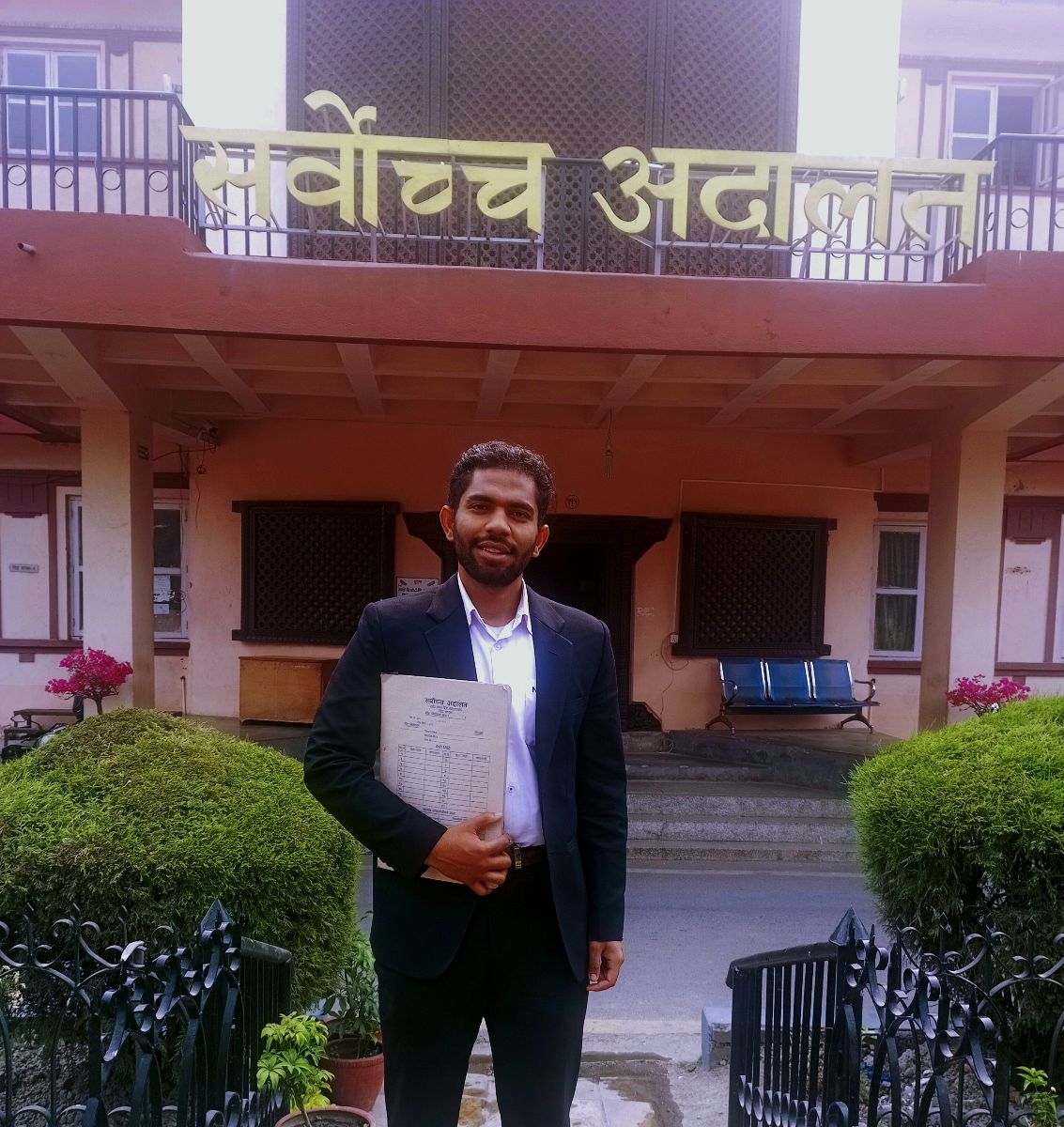
Roshan Auji
Undergraduate law student at Nepal Law Campus with a keen interest in constitutional and criminal law and justice. Passionate about legal research in civil and political rights of citizens.
View all posts by Roshan Auji